 ANTINCORPAN TÍN JOINT STOCK COMPANYPeace of mind • Trust • AN TÍN
 AUTHORIZED APPLICATOR
ANTINCORPAN TÍN JOINT STOCK COMPANYPeace of mind • Trust • AN TÍN
AUTHORIZED APPLICATOR
Factory floors take forklifts, heavy loads, chemicals and abrasion every day. A floor system with the right material and the right installation procedure limits dust, is easy to clean and extends the repair cycle. ANTINCORP delivers turnkey, from survey through to final line marking.
Factories, logistics warehouses, production areas, car parks, basements, showrooms, food plants, textile and dyeing plants and commercial buildings.
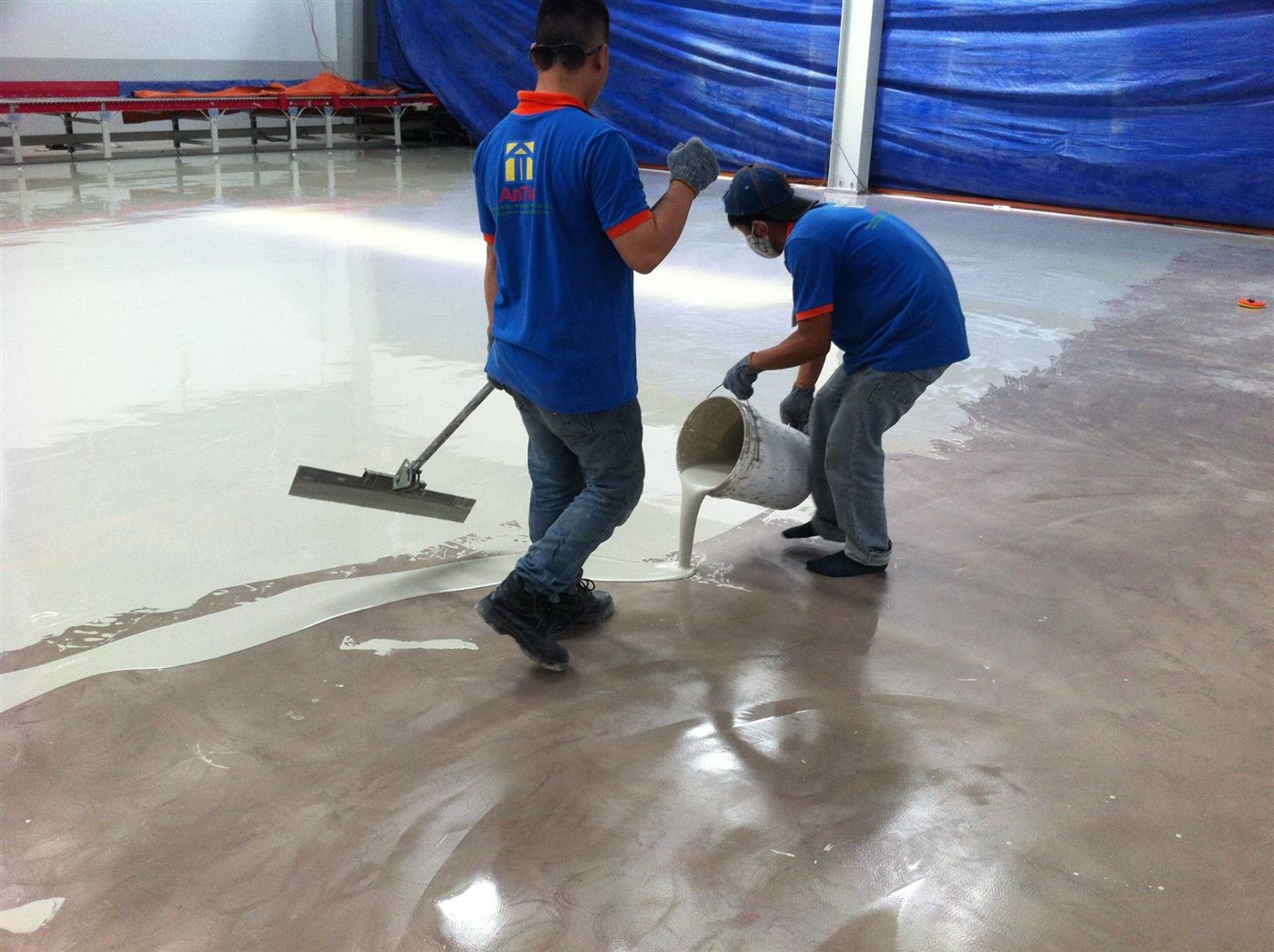
Epoxy is hard, bonds well and resists abrasion, and is commonly used for factory and warehouse floors. PU is more elastic and suits places with temperature change or where flexibility is needed. The choice depends on actual use; ANTINCORP advises after a survey.
Yes, after grinding, crack treatment, patching and a moisture check. A very weak or very damp substrate must be treated first.
ANTINCORP can divide the area and work in phases, scheduled outside working hours to limit disruption to factory operations.
Curing and load-bearing times depend on the material system and weather. ANTINCORP states the milestones for light foot traffic and for forklifts when planning the work.
Send photos and details of the current condition. The ANTINCORP technical team will survey the site, propose a solution and prepare a quotation.
REQUEST A QUOTE → CALL +84 906 898 353Concrete should be hardened and dust-proofed before Epoxy is applied: see PENESEAL FH (Vietnamese page).